2026 Topps Chrome Sapphire Baseball: The Complete Odds, Parallel, and Print Run Breakdown
Sapphire is the online-only version of flagship Topps Chrome, the same 300-card base checklist re-done on that deep blue sapphire refractor stock and sold direct in a short ordering window. It arrives in Chrome's 30th anniversary year, and it plays by two different rule sets under one roof. The base card color parallels carry no stamped serial number, just a color ladder and pack odds. The autographs are the opposite: they are hand-numbered on the card. So one half of this product is a math problem and the other half is printed right on the cardboard.
What is in the product
This is flagship Chrome, so the base is big-league players, not prospects. The 300-card base runs from Shohei Ohtani at number one through Aaron Judge at 100 and Mike Trout at 200, with Yoshinobu Yamamoto, Tarik Skubal, Paul Skenes, Paul Goldschmidt, and Garrett Crochet in the mix, plus already-debuted rookies like Nick Kurtz and Roman Anthony. On top of that sit four more pieces:
- Base Image Variations, 50 cards, the photo-variation short prints.
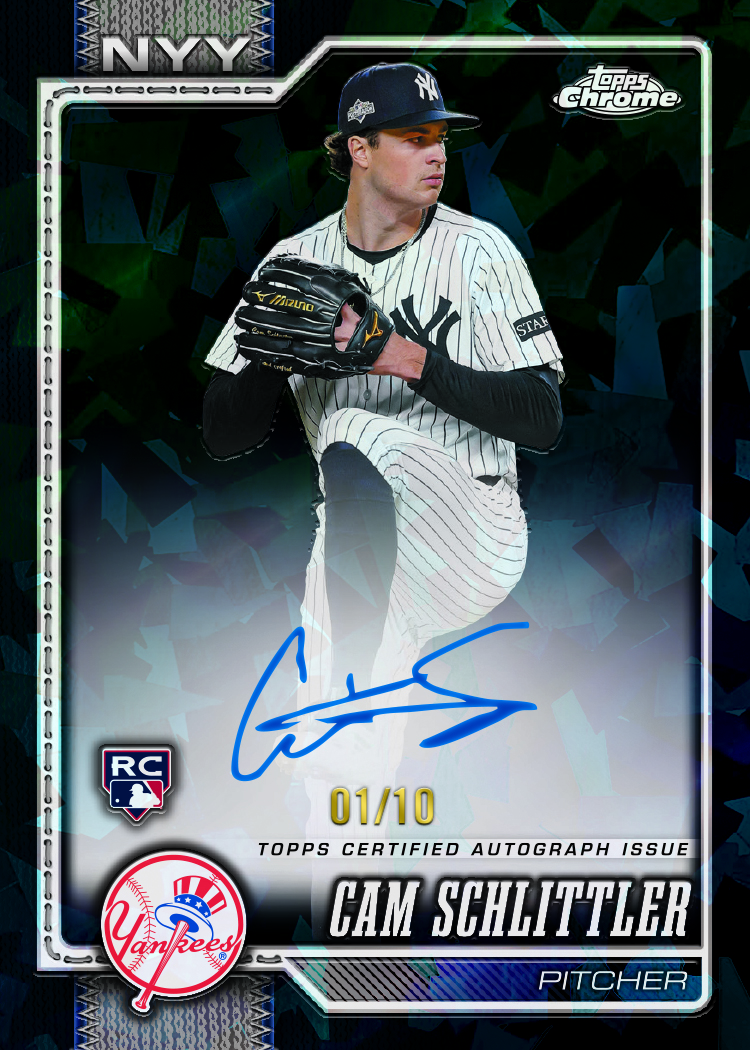
- Chrome Sapphire Rookie Autographs, 34 on-card signers. This is the 2026 rookie and debut class: Jac Caglianone, Roman Anthony, Andrew Painter, Bryce Eldridge, Chase DeLauter, Colson Montgomery, Konnor Griffin, Trey Yesavage, Samuel Basallo, Nolan McLean, Cam Schlittler, plus the NPB arrivals Munetaka Murakami, Kazuma Okamoto, and Tatsuya Imai.
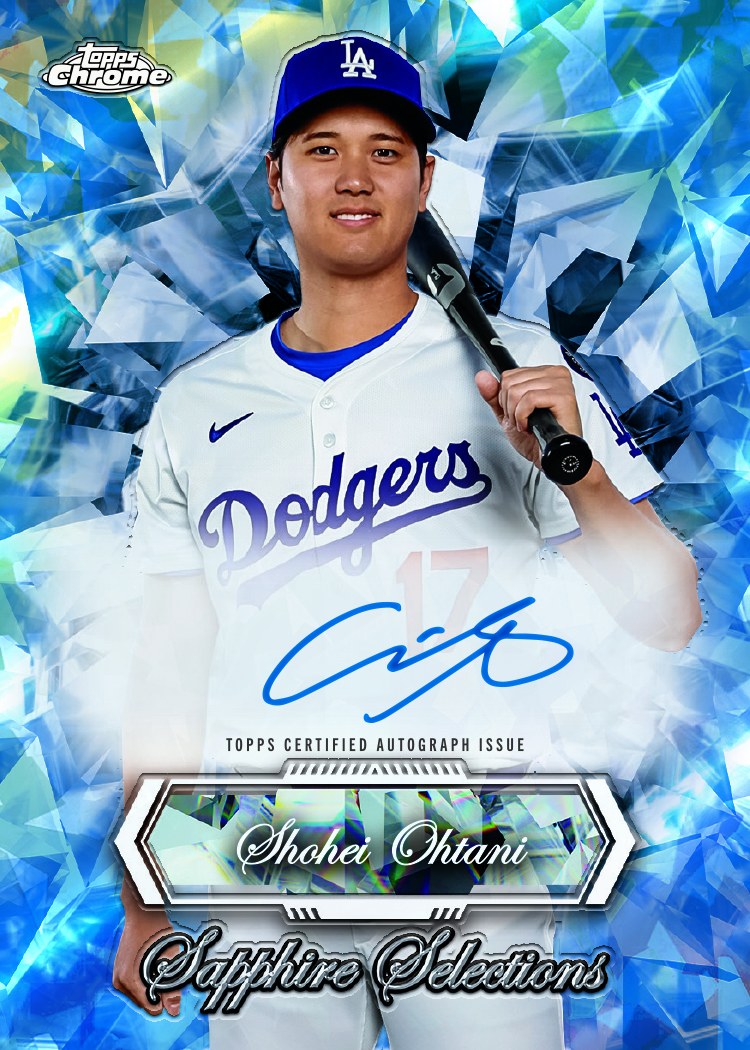
- Sapphire Selections Autographs, 13 signers, the tougher signed insert and a premium mix: Aaron Judge, Mike Trout, Shohei Ohtani, and Elly De La Cruz alongside Caglianone, Nick Kurtz, Colson Montgomery, and more.
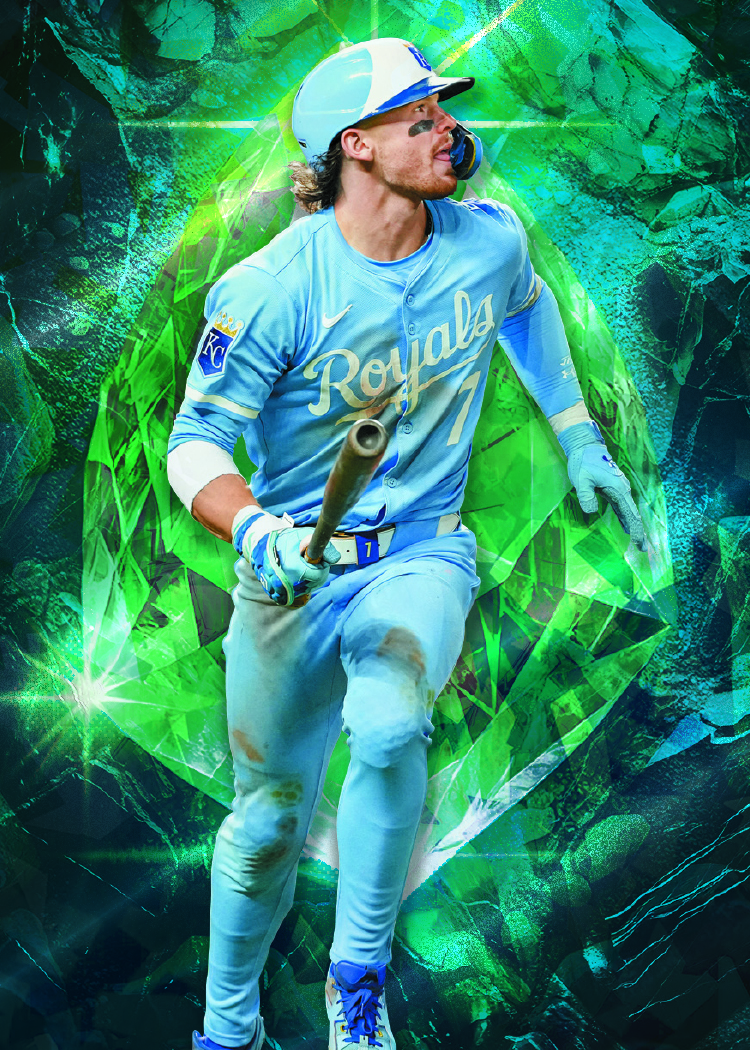
- Hidden Gems, a 5-card insert of Ohtani, Bobby Witt Jr., Nick Kurtz, Caglianone, and Basallo. This one is not on the odds sheet, so I am leaving it out of the math and flagging it as unquantified.
Boxes are four cards a pack, eight packs a box, one autograph per box.
How I solved it
The base card parallels do not print a serial number, so on paper you only get pull odds. But the ladder is a known quantity. I anchored on the one fixed point every base group shares: Padparadscha is the one-of-one. If a card's Padparadscha is a true 1/1 and it falls at a known rate, that rate tells you how many of every other color exist. Each parallel's count is that group's Padparadscha odds divided by the parallel's odds.
The result snaps to the standard numbering. Gold solves to fifty, Orange to twenty-five, Black to ten, Red to five, and Padparadscha to one. That is the Sapphire ladder collectors already know, falling straight out of the odds. So even though nothing is stamped on the base parallels, the print runs are effectively fixed, and the base tables below use those known numbers.
The autographs are different. They are hand-numbered on the card, base to /199 or less, so I do not solve those from odds. I use the stamped serials. Worth knowing: the pack odds do not perfectly reproduce those serials, because Topps rounds its odds, so for the autos the printed number is the truth and the odds are just the pull rate.
The base rainbow (300 cards)
| Parallel | Effective print run | Odds |
|---|---|---|
| Base Sapphire | unnumbered, ~1000 per card | common |
| Gold Sapphire | /50 | 1:7 |
| White Sapphire | /30 (new for 2026) | 1:12 |
| Orange Sapphire | /25 | 1:14 |
| Black Sapphire | /10 | 1:35 |
| Red Sapphire | /5 | 1:70 |
| Padparadscha | 1/1 | 1:344 |
One thing to flag up top: White Sapphire is new to the base ladder this year at /30. The Sapphire base rainbow has run Gold, Orange, Black, Red, and Padparadscha in past years, so White is a fresh rung, and the odds line up cleanly with a /30.
The top of the base ladder is deep. A Gold Sapphire is a /50 and White and Orange sit at /30 and /25, common enough that they trade like parallels, not chase cards. The product tightens fast at the bottom: Black at /10, Red at /5, and the single Padparadscha. That Black-Red-Padparadscha tier is where the real base scarcity lives, and on an Ohtani, a Judge, or a Kurtz rookie it is the only part of the base rainbow worth chasing hard.
Image Variations (50 cards)
| Parallel | Effective print run | Odds |
|---|---|---|
| Sapphire | ~/75 | 1:28 |
| Gold | /50 | 1:42 |
| Orange | /25 | 1:84 |
| Black | /10 | 1:209 |
| Red | /5 | 1:417 |
| Padparadscha | 1/1 | 1:2,064 |
The photo variations run the same shape, just seeded deeper in the packs. The base image variation itself is about a /75, and the colored tiers mirror the base exactly: fifty, twenty-five, ten, five, one. These are short prints, but the colored ones are the only genuinely tough pieces here.
Chrome Sapphire Rookie Autographs (34 signers)
These are hand-numbered, and the base auto is the guaranteed box hit at /199.
| Parallel | Serial | Odds |
|---|---|---|
| Autograph | /199 | 1:24 |
| Green | /99 | 1:35 |
| Purple | /75 | 1:46 |
| Gold | /50 | 1:64 |
| Orange | /25 | 1:130 |
| Black | /10 | 1:327 |
| Red | /5 | 1:621 |
| Padparadscha | 1/1 | 1:3,065 |
This is where the product gets serious. The base auto at /199 is the one you pull most, so do not overpay for the plain version. The value is the drop: Green /99, Purple /75, Gold /50, then a real cliff to Orange /25, Black /10, Red /5, and the Padparadscha. The colored auto parallels from Gold down are the scarce, PC-worthy pieces on a core name. The chases here are the top of the rookie class: Nick Kurtz off a Rookie of the Year season, Roman Anthony as a former number one overall prospect now in the majors, and Jac Caglianone, who shows up in both auto sets and Hidden Gems. Add the international draws in Murakami and Okamoto and the postseason name in Yesavage, and the low-numbered colors on those signers are where four and five figures live.
Sapphire Selections Autographs (13 signers)
| Parallel | Serial | Odds |
|---|---|---|
| Autograph | /50 | 1:155 |
| Orange | /25 | 1:371 |
| Black | /10 | 1:784 |
| Red | /5 | 1:1,556 |
| Padparadscha | 1/1 | 1:7,779 |
These are the scarcest signed cards in the set, and the checklist is the reason: 13 signers, and it is where the marquee veterans actually sign. The base Selections auto is a /50, tougher than the /199 base Rookie auto, and it is a short ladder down to the 1/1. On-card Ohtani, Judge, and Trout autos are rare in standard Chrome, and Selections is the place you get them here. If you want the hardest signature in Sapphire on a given name, this is the set.
What it means
Sapphire looks deep at the top and gets genuinely thin at the bottom, and the base half hides that because nothing is stamped. The base rainbow above Black is parallel-common. The chase on the base side is the same three-rung tier in every group: Black /10, Red /5, Padparadscha 1/1. The autographs play it straight with printed numbers, and that is where the real rarity sits: a /199 base auto is a box hit, but a Black /10, a Red /5, or a Selections auto on a star is a genuine chase.
If you are buying singles, know which half you are in. A Gold base /50 is a parallel. A Black auto /10 or a Selections Red /5 is a real card. On the unnumbered base side the color name does a lot of work to make common cards feel rare, and the ladder is the only thing that tells them apart. On the auto side, the number is right there on the card.
For the full checklist and current sale prices on any of these, the tools are here:
This is not financial advice. These are cards. The data and analysis are here to inform. You make your own calls.
This article was generated with the assistance of AI and reviewed before publishing. Always verify latest market data, stats, or news.
Published: August 2026