2026 Topps Black and White Baseball: The Complete Odds, Parallel, and Print Run Breakdown
2026 Topps Black and White Baseball goes on sale November 16 at noon ET, per Topps. Topps has posted the odds sheet, with two columns: Hobby and Mega Box. The sheet prints no print runs and no pack counts this year, so nothing below is a number Topps has stated. But the Full Color lines, last year's one-of-ones, only land on whole cards at one pair of pack counts: about 70,000 hobby packs and about 21,000 mega packs. At 10 packs a box, which the odds point to, that is about 7,000 hobby boxes. From there the odds fit the same ladder as last year (Green /99, Yellow /75, Blue /50, Purple /25, Red /10, Orange /5 and a Full Color 1/1), with 96 to 97 percent of each numbered base and insert run in packs, and they account for only 278 of the 295 Full Colors on the checklist.
The box
Topps' product page says one thing about the configuration: "Hobby boxes deliver five numbered parallels and a guaranteed autograph." It gives no packs per box and no cards per pack, and neither does the sheet. The odds can settle the first of those.
Add up every hobby autograph line and you get one autograph every 9.9 packs. Add up the lines that fit a numbered run (the base parallels, the insert parallels, Golden Hour and Flashpoint) and you get 5.15 every 10 packs. Leave out Golden Hour and Flashpoint, which are inserts, and it is 5.04. One autograph and five numbered cards is Topps' box promise, so the odds point to a hobby box of 10 packs. That is our reading of the odds, not a configuration Topps has stated. Here is what the hobby odds come to over those 10 packs:
| Line | Per 10 hobby packs |
|---|---|
| Developmental | about 5 |
| Frame Rate | about 3.3 |
| Shutter Speed | about 3.3 |
| Depth of Field | about 1 |
| Base parallels, Green to Full Color | 4.66 |
| Insert parallels, Golden Hour and Flashpoint | 0.49 |
| Prized Portraits Silver Framed Border | 0.17 |
| Image variation short print | 0.83 |
| Image variation super short print | 0.13 |
| Autograph | 1.0 |
That is 2.0 cards a pack that are not a plain base card. The rest of each pack is base cards, and the sheet can't say how many, because it has no line for the base card and no source we hold gives the pack size.
The Mega Box column also adds up to 2.0 cards a pack that are not a plain base card, but it is a different two cards. The Film Strip parallel is printed at 1:1, one a mega pack, one pack in three has a Vintage Vantage, and one in three has a base parallel. Autographs fall one in 21 mega packs. The four regular inserts are far harder to pull than in hobby (Developmental is 1:30 against 1:2). How many packs are in a Mega Box is not in any source we hold, so we are not stating it.
Four lines are hobby only: Golden Hour, Flashpoint, and the On-Card Autographs with their Full Color version. Six are mega only: the Film Strip parallel, Vintage Vantage, and its Orange, Black, Red and Full Color parallels.
The checklist
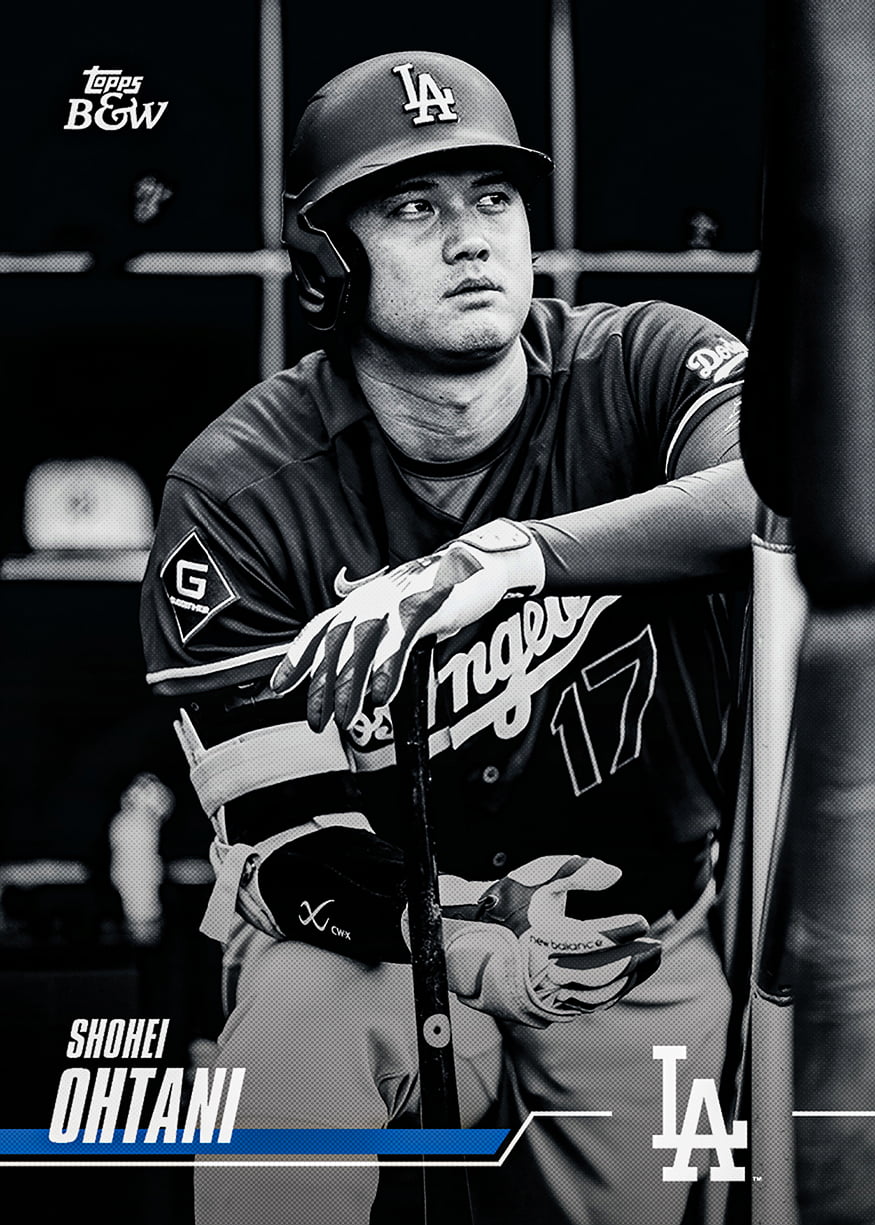
The base set is 120 cards, five more than last year. Numbers 1 to 3 are Shohei Ohtani, Aaron Judge and Bryce Harper, and the set mixes current players with retired names like Ken Griffey Jr. (#89), Derek Jeter (#82), Nolan Ryan (#74), Ichiro (#88), Tony Gwynn (#99) and Barry Bonds (#92).
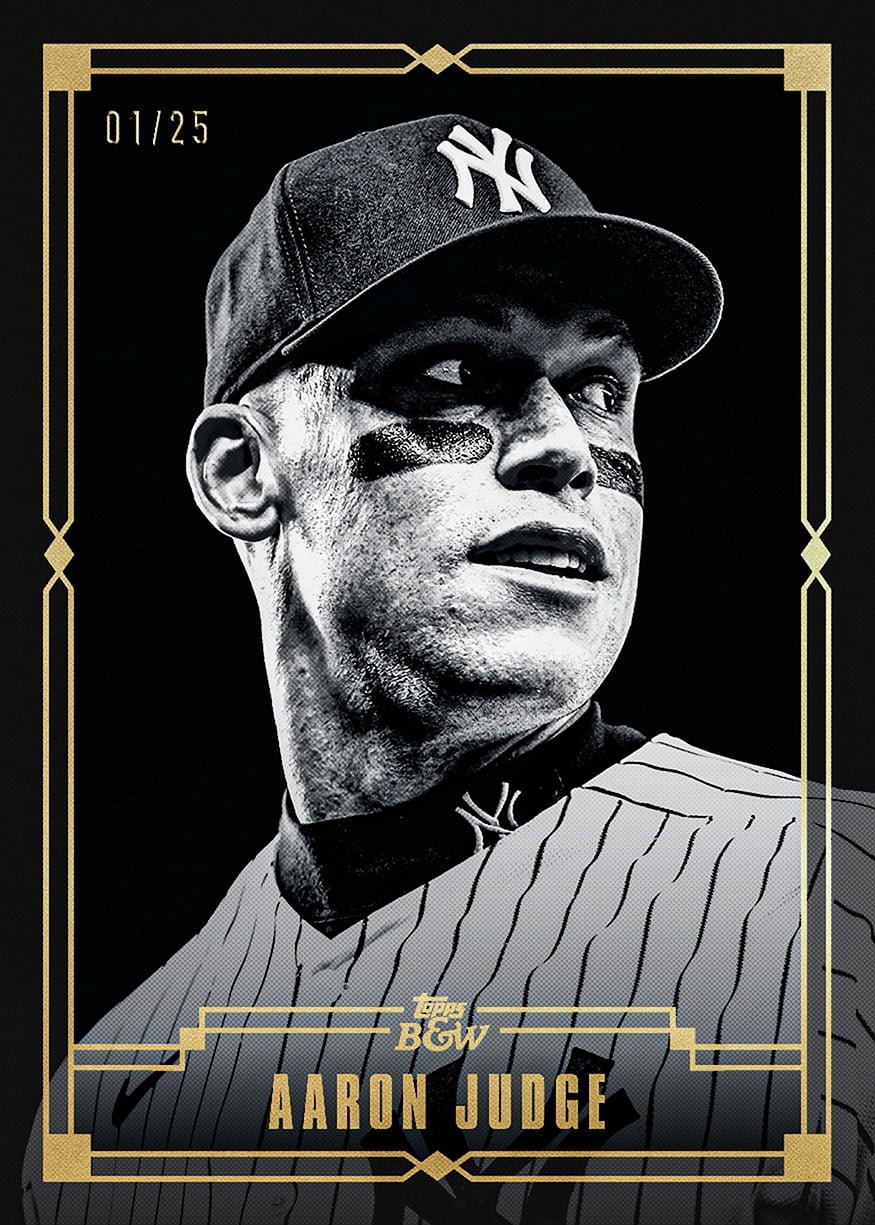
Jacob Misiorowski, Cam Schlittler and Aaron Judge are the most-featured players, on nine cards each counting their base card. Ohtani and Munetaka Murakami are on eight, and Konnor Griffin, JJ Wetherholt and Kevin McGonigle are on seven.
The inserts:
- Developmental, 30 cards. Topps' product page says the insert is for players in their rookie year. The names include Roman Anthony, Konnor Griffin, JJ Wetherholt, Kevin McGonigle, Munetaka Murakami, Jacob Misiorowski, Nolan McLean and Travis Bazzana.
- Depth of Field, 20 cards, new this year. Ohtani, Judge, Paul Skenes, Juan Soto, Bobby Witt Jr. and Ichiro are in it.
- Frame Rate, 10 cards, including Judge, Elly De La Cruz, Jeter and Pedro Martínez.
- Shutter Speed, 15 cards, including Harper, Griffey, Yoshinobu Yamamoto and Junior Caminero.
- Prized Portraits, 10 cards: Ohtani, Judge, Schlittler, Wetherholt, Jeter, Mike Trout, Vladimir Guerrero Jr., Kyle Schwarber, CC Sabathia and Anthony. There is no plain version on the sheet. The Silver Framed Border is the most common one.
- Golden Hour, 15 cards, hobby only. Topps' product page describes it as rare and numbered.
- Flashpoint, five cards, hobby only: Ohtani, Harper, Pete Crow-Armstrong, Trout and Schlittler. Topps' product page describes it as extremely rare.
- Vintage Vantage, 10 cards, mega only, all retired players: Hideo Nomo, Tom Glavine, Alex Rodriguez, Chase Utley, Reggie Jackson, David Ortiz, Albert Pujols, Chipper Jones, Roger Clemens and Sabathia.
There are 20 image variation short prints and 10 super short prints, numbered to match a base card. Ohtani, Judge and Murakami have one of each.
The autographs come in two kinds. There are 70 sticker autograph signers, a mix of current players and retired names such as Bonds, Jeter, Griffey, Ichiro, Ryan, Chipper Jones and David Ortiz. The 10 On-Card Autographs are Ohtani, Judge, Griffey, Clemens, Schwarber, Crow-Armstrong, Murakami, Misiorowski, McGonigle and Griffin.
In all, the checklist runs to 345 cards.
How many packs
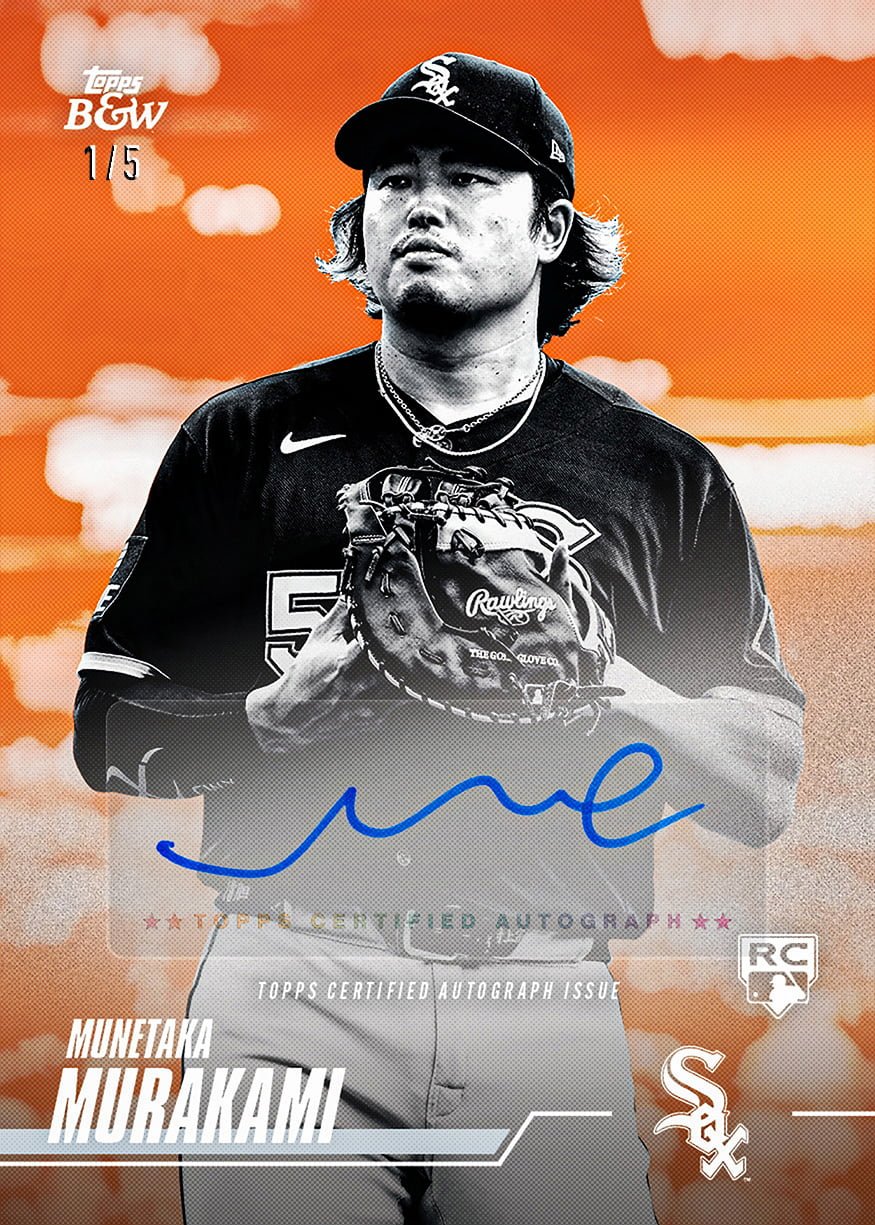
The odds are per pack and per format, and a numbered card's copies are split between two kinds of pack. So one line can't give a pack count unless the card is in only one format. Two Full Color lines are. (The sheet does not print "1/1" beside the Full Color. It was the one-of-one last year, Topps' render at the top of this article shows a 1/1, and the counts below never run past one a card, so we treat it as one.)
Hobby. The On-Card Autographs Full Color is hobby only, at 1:7,000. There are 10 signers, so if all 10 one-of-ones are in packs, 10 times 7,000 is 70,000 hobby packs. The plain On-Card Autographs line is 1:1,400, five times as common, so five cards for each one-of-one. That would be true at any pack count, so it does not test the 70,000. The check below does.
Mega. The Vintage Vantage Full Color is mega only, at 1:2,625. If all 10 were in packs that would be 26,250 mega packs. If eight were, it would be 21,000.
The check. Every other Full Color line is in both formats, so each can be tested with its own two odds. On the base set and the four regular inserts the mega odds are 1.391 times the hobby odds, so a mega pack counts as 0.72 of a hobby pack on those lines. Seven lines can be tested this way. Only one pair of pack counts puts a whole number of one-of-ones on all seven:
| Full Color line | Checklist | 70,000 hobby and 21,000 mega | 70,000 hobby and 26,250 mega |
|---|---|---|---|
| Base | 120 | 115.0 | 120.1 |
| Developmental | 30 | 28.0 | 29.2 |
| Depth of Field | 20 | 18.0 | 18.8 |
| Shutter Speed | 15 | 13.0 | 13.6 |
| Frame Rate | 10 | 8.0 | 8.4 |
| Prized Portraits Gold | 10 | 8.0 | 8.5 |
| Sticker Autographs | 70 | 70.0 | 72.2 |
At 21,000 mega packs every line is a whole number to within the rounding of the odds, and the sticker autographs come out at exactly their 70 signers. At 26,250 nothing is whole and the sheet would have 72 one-of-one autographs for 70 signers. The seven lines also find the answer with neither anchor. We searched every pair of pack counts from 5,000 to 200,000 hobby and 1,000 to 100,000 mega, asking only that each of the seven lines hold a whole number of cards no bigger than its checklist. The only pairs that pass sit within five packs of 70,000 and 21,000. So the 10 on-card and eight Vintage Vantage one-of-ones are results as much as starting points: at those counts both single-format lines land on exactly 10.0 and 8.0.
The combined lines also agree without leaning on either anchor. Eight Frame Rate Full Colors at 1:10,637 is 85,096 hobby-equivalent packs, 13 Shutter Speed at 1:6,546 is 85,098, 28 Developmental at 1:3,039 is 85,092, and 70,000 hobby packs plus 21,000 mega packs at 0.72 each is 85,094.
| Format | Count | Basis |
|---|---|---|
| Hobby | about 70,000 packs, about 7,000 boxes at 10 packs | On-Card Autographs Full Color, 10 at 1:7,000 |
| Mega Box | about 21,000 packs | Vintage Vantage Full Color, eight at 1:2,625 |
What sits under these figures: Topps worked each Full Color line out from a whole number of cards, the Full Color is one copy of a card, and no line has more Full Colors than its checklist has cards. Drop that last one and exactly double (140,000 and 42,000) fits just as well, but it needs 16 Frame Rate Full Colors for 10 cards. The box count also needs the 10-pack box. If only nine on-card one-of-ones were in packs, the hobby count would be 63,000, but then no other line fits. These are still our figures from the odds, not Topps'.
One other reading is worth ruling out. If every numbered run were in packs in full, the base and insert ladders would point to about 72,100 hobby packs and about 21,750 mega packs. That puts 10.3 on-card one-of-ones and 72 sticker autograph one-of-ones in packs, more than the checklist has signers, and no Full Color line lands on a whole card. So we use 70,000 and 21,000, and read the numbered tiers as a little short of full.
The one-of-ones that are not in packs
The same table shows something else. The checklist has 295 cards with a Full Color line, and the odds put 278 Full Colors in packs: about 227 in hobby and about 51 in mega. For the base set and the four regular inserts this does not depend on the pack counts at all. Their Full Color odds are in a fixed ratio to each other, and 8, 13, 18, 28 and 115 is the only set of whole numbers within the checklist that matches it.
| Line | Checklist | In packs | Short |
|---|---|---|---|
| Base | 120 | 115 | 5 |
| Developmental | 30 | 28 | 2 |
| Depth of Field | 20 | 18 | 2 |
| Shutter Speed | 15 | 13 | 2 |
| Frame Rate | 10 | 8 | 2 |
| Prized Portraits Gold | 10 | 8 | 2 |
| Vintage Vantage | 10 | 8 | 2 |
| Sticker Autographs | 70 | 70 | 0 |
| On-Card Autographs | 10 | 10 | 0 |
Two are short in every insert, whatever its size, and five in the base set. That is 17 the odds do not account for. The sheet doesn't say whether they were never made or are held back, or which cards they are. Topps' note on the sheet says a subject is not guaranteed to appear in every parallel or variation. The autograph one-of-ones are all there.
The base parallels
None of the runs in this table is printed on the sheet or on Topps' product page. The "Fits" column is the run the odds are consistent with, and for six of the seven it is also last year's run.
| Parallel | Fits | Hobby | Mega | In packs | Per card |
|---|---|---|---|---|---|
| Film Strip | no run | - | 1:1 | about 21,000 | about 175 |
| Green | /99 | 1:7 | 1:10 | about 11,350 to 12,460 | about 95 to 104 |
| Yellow | /75 | 1:10 | 1:14 | about 8,160 to 8,770 | about 68 to 73 |
| Negative | /75 | 1:10 | 1:14 | about 8,160 to 8,770 | about 68 to 73 |
| Blue | /50 | 1:15 | 1:20 | about 5,780 to 5,870 | about 48 to 49 |
| Purple | /25 | 1:29 | 1:41 | about 2,885 to 2,925 | about 24.2 |
| Red | /10 | 1:73 | 1:102 | about 1,160 | about 9.7 |
| Orange | /5 | 1:146 | 1:203 | 583 | 4.86 |
| Full Color | 1/1 | 1:740 | 1:1,029 | 115 | 115 of 120 |
If those runs are right, 96 to 97 percent of each is in packs. The Orange comes to 583 cards against 600 for a full run of five, the Red to about 1,165 against 1,200, the Purple to about 2,900 against 3,000. The inserts show the same share on every tier, and so do Golden Hour, Flashpoint and Vintage Vantage below. The autographs are the exception: those come out full or nearly full. The sheet doesn't say where the other three to four percent goes.
How firm each run is. The Orange, Red and Purple are tight. Their odds are long enough that rounding barely moves them, they sit in a clean 5 to 10 to 25 ratio, and all four regular inserts repeat them. A /5, /10 and /25 is the only standard ladder that fits. The Blue fits /50 well (48 to 49 a card). The Yellow and Green have short, heavily rounded odds, so they are looser: 68 to 73 a card fits a /75, and 95 to 104 fits a /99 (or a /100), but neither is pinned by the odds alone.
The Negative is new and has the Yellow's odds exactly, 1:10 and 1:14. So there are as many Negatives as Yellows, about 68 to 73 of each card. We can't tell from the odds whether it carries a serial number. One hint that it does: the lines that fit a numbered run add up to 5.15 a hobby box with the Negative counted and 4.15 without it, and Topps promises five.
The Film Strip is the mega parallel, one in every mega pack at the printed 1:1. That is about 21,000 cards and about 175 of each base card, with no run to check it against. A printed 1:1 is a rounded number, so treat that as a rough figure.
If the runs hold, each base card has 340 numbered copies printed, 40,800 across the set, and about 330 of each are in packs.
The base card itself can't be counted yet. The sheet has no base card line, and nothing we hold gives the cards per pack. What the sheet does give is the scale: each base card in a pack is worth about 583 copies of every base card from hobby and about 175 from mega. Multiply by the number of base cards a pack turns out to hold. We'll fill this in when the pack size is confirmed.
The inserts
The four regular inserts share a short ladder: Purple, Red, Orange and Full Color. The odds below are hobby. Mega odds are 1.39 times as long on every line.
| Insert | Cards | Purple, fits /25 | Red, fits /10 | Orange, fits /5 | Full Color 1/1 |
|---|---|---|---|---|---|
| Developmental | 30 | 1:117, about 727 | 1:292, about 291 | 1:587, 145 | 1:3,039, 28 |
| Depth of Field | 20 | 1:175, about 486 | 1:439, about 194 | 1:877, 97 | 1:4,727, 18 |
| Shutter Speed | 15 | 1:234, about 364 | 1:587, 145 | 1:1,182, 72 | 1:6,546, 13 |
| Frame Rate | 10 | 1:352, about 242 | 1:877, 97 | 1:1,773, 48 | 1:10,637, 8 |
Per card that is about 24.2 Purples, 9.7 Reds and 4.8 to 4.85 Oranges in packs, on all four inserts. Several of the smaller lines land on whole cards: 97 Depth of Field Oranges of 100, 97 Frame Rate Reds of 100, 72 Shutter Speed Oranges of 75, 48 Frame Rate Oranges of 50.
The unnumbered versions:
| Insert | Cards | Hobby | Mega | In packs | Per card |
|---|---|---|---|---|---|
| Developmental | 30 | 1:2 | 1:30 | about 35,700 (28,700 to 47,400) | about 1,190 (960 to 1,580) |
| Frame Rate | 10 | 1:3 | 1:32 | about 24,000 (20,600 to 28,700) | about 2,400 (2,060 to 2,870) |
| Shutter Speed | 15 | 1:3 | 1:34 | about 24,000 (20,600 to 28,600) | about 1,600 (1,370 to 1,910) |
| Depth of Field | 20 | 1:10 | 1:50 | about 7,400 (7,100 to 7,800) | about 370 (355 to 390) |
| Vintage Vantage | 10 | - | 1:3 | about 7,000 (6,000 to 8,400) | about 700 (600 to 840) |
The ranges are wide because 1:2 and 1:3 are heavily rounded numbers. Depth of Field is the one to notice. It is a new insert, and at about 370 copies of each card it is three to six times scarcer than the other three.
Prized Portraits has three lines and nearly the same odds in both formats.
| Version | Fits | Hobby | Mega | In packs | Per card |
|---|---|---|---|---|---|
| Silver Framed Border | no run | 1:58 | 1:58 | about 1,570 | about 157 |
| Gold Framed Border | /25 | 1:377 | 1:372 | about 242 | about 24.2 |
| Gold Framed Border Full Color | 1/1 | 1:11,408 | 1:11,266 | 8 | 8 of 10 |
The Silver comes to about 157 of each card, which matches no standard run, so we read it as unnumbered. The Gold sits at 24.2 a card, the same place as every Purple /25 in the product, and last year's Gold was /25.
Golden Hour is 1:96 in hobby only. That is about 729 cards, about 48.6 of each of the 15. Topps' product page calls it numbered, and a run of 50 with 97 percent in packs would be 48.5. The odds fit /50.
Flashpoint is 1:722 in hobby only, which is 97 cards in the whole product, about 19 of each of the five, and about one in every 72 hobby boxes. That is what a run of 20 would look like at 97 percent. The sheet can't say whether the card carries a serial number.
Vintage Vantage has its own ladder in mega packs: Orange 1:87, Black 1:216, Red 1:437 and Full Color 1:2,625. At 21,000 mega packs that is about 241 Oranges, 97 Blacks, 48 Reds and eight Full Colors, or about 24.1, 9.7 and 4.8 of each card. Those fit /25, /10 and /5, with the colors in a different order from the rest of the product: here the Orange would be the big one and the Red the /5.
The image variations. The short prints are 1:12 in hobby and 1:11 in mega, about 7,700 cards (7,400 to 8,100), about 390 of each of the 20. The super short prints are 1:77 and 1:76, about 1,185 cards, about 119 of each of the 10. Neither has a parallel on the sheet.
The autographs
The odds put about 8,040 autographs in packs: about 7,050 in hobby, one every 9.9 packs, and about 1,000 in mega, one every 21 packs.
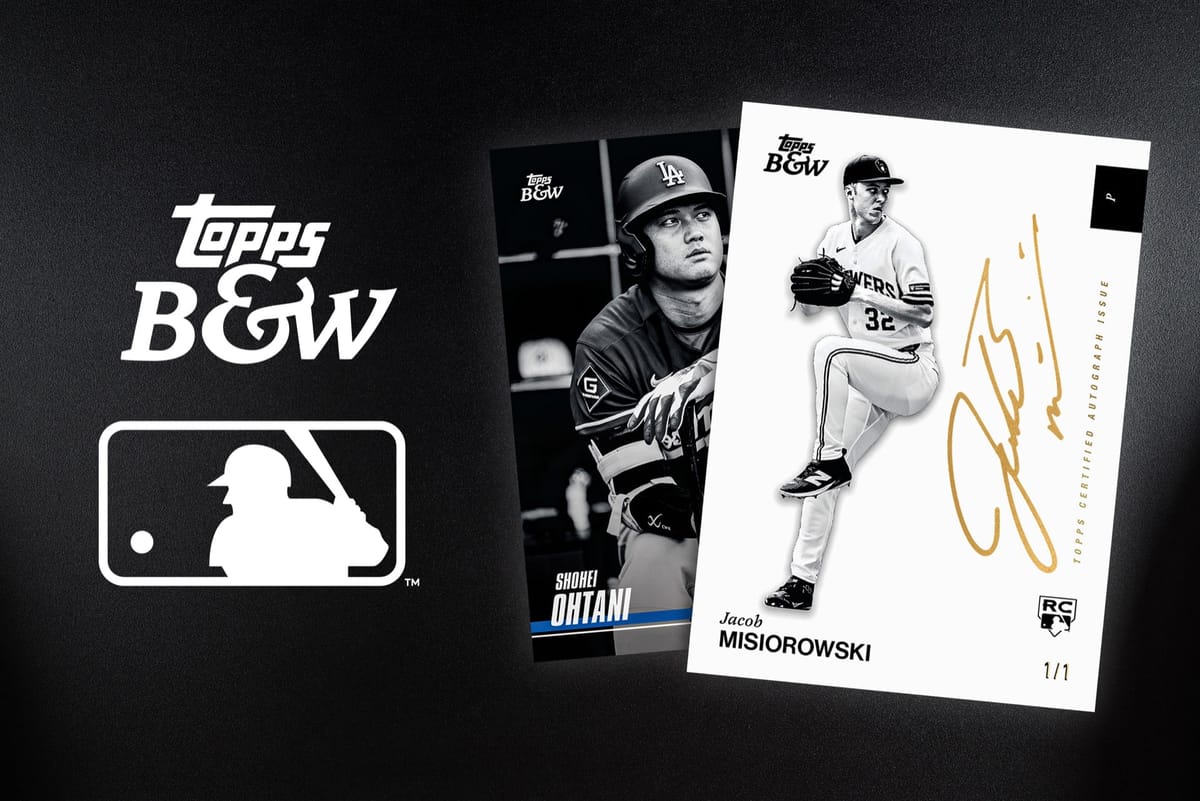
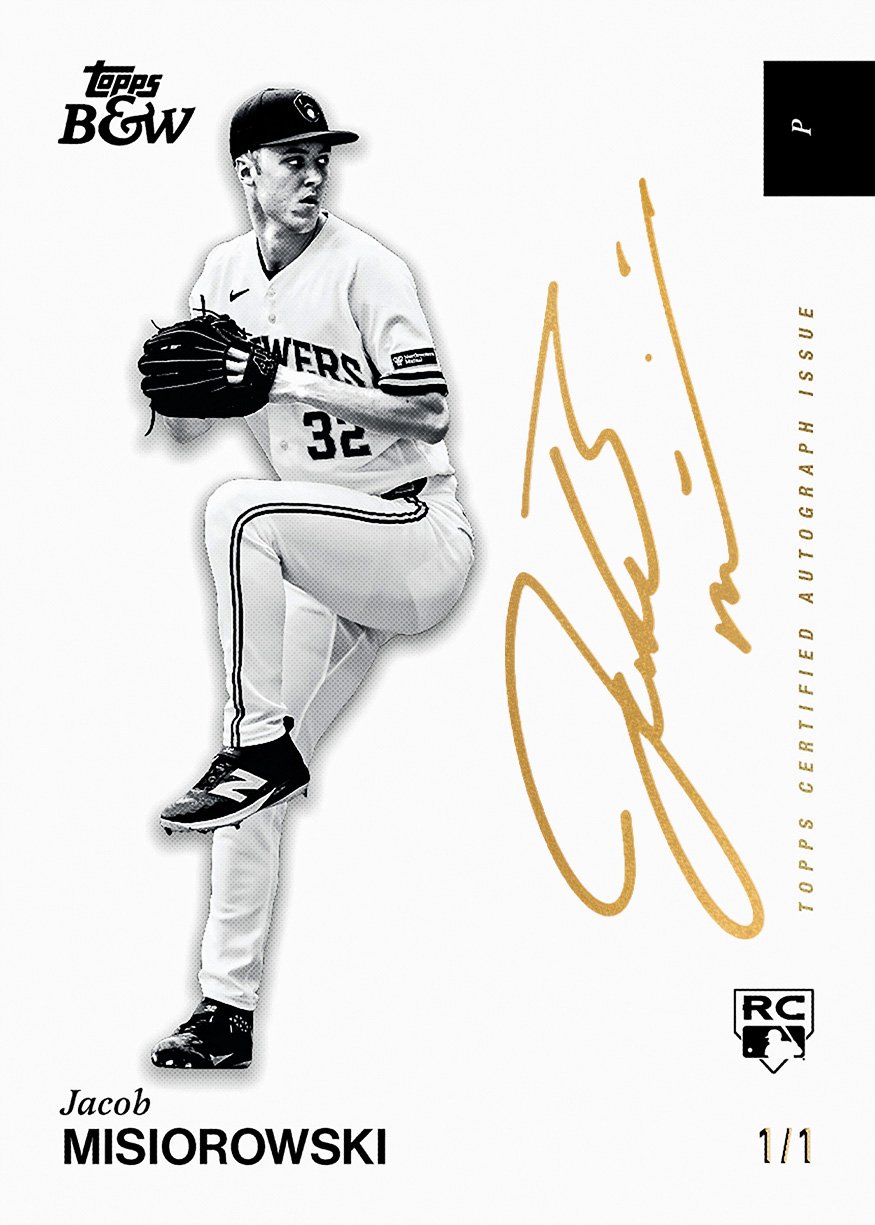
On-Card Autographs are hobby only. The plain line is 1:1,400, which is 50 cards, exactly five for each of the 10 signers. The Full Color is 1:7,000, 10 cards, one each. Last year's on-card autographs were a Blue Ink numbered to 5 and a Gold Ink 1/1, and this year's odds fit the same two tiers. Topps' own render of the Misiorowski on-card autograph, shown at the top of this article, has a gold signature and a 1/1 serial number. So the odds put 60 on-card autographs in packs, and one falls about once every 117 hobby boxes.
Sticker Autographs have no unnumbered line. Every sticker autograph on the sheet is one of eight parallels, the same eight as the base set.
| Parallel | Fits | Hobby | Mega | In packs | Signers covered |
|---|---|---|---|---|---|
| Green | /99 | 1:91 | 1:191 | about 880 | about 9 |
| Yellow | /75 | 1:64 | 1:133 | about 1,250 | about 17 |
| Negative | /75 | 1:40 | 1:85 | about 2,000 | about 27 |
| Blue | /50 | 1:47 | 1:98 | about 1,700 | about 34 to 35 |
| Purple | /25 | 1:69 | 1:145 | about 1,160 | about 46 to 48 |
| Red | /10 | 1:139 | 1:292 | about 575 | about 58 to 59 |
| Orange | /5 | 1:230 | 1:488 | about 347 | 70 |
| Full Color | 1/1 | 1:1,148 | 1:2,333 | 70 | 70 |
The ladder is not complete for every signer. The odds do not get longer as the run gets smaller. The Green, the biggest run last year at /99, is 1:91 while the Negative is 1:40 and the Blue is 1:47. That happens when a parallel exists for only some of the signers. Dividing the cards in packs by the run gives the last column: all 70 signers have a Full Color and an Orange, about 58 have a Red, about 47 a Purple, about 34 a Blue, about 27 a Negative, about 17 a Yellow, and only about nine have a Green. Read those as about. They assume the autograph parallels share the base set's runs, which the odds can only confirm at the bottom: 347 Oranges is 70 signers at five each, and 70 Full Colors is one each. The Negative figure also assumes a run of 75.
The Orange line also shows that the autograph runs are in packs in full, or very nearly: 347 of 350. The base and insert tiers sit at 96 to 97 percent.
Spread evenly, the sticker autographs come to about 114 cards a signer. It will not be even. On the fitted runs, a signer with only the bottom four tiers would have 41 cards, and one with all eight would have 340.
The cards with no print run
| Card | Cards | In packs | Copies of each |
|---|---|---|---|
| Base card | 120 | needs the pack size | about 583 for each base card in a hobby pack, 175 in a mega pack |
| Base Film Strip (mega) | 120 | about 21,000 | about 175 |
| Base Negative | 120 | about 8,160 to 8,770 | about 68 to 73 |
| Developmental | 30 | about 35,700 | about 1,190 |
| Frame Rate | 10 | about 24,000 | about 2,400 |
| Shutter Speed | 15 | about 24,000 | about 1,600 |
| Depth of Field | 20 | about 7,400 | about 370 |
| Vintage Vantage (mega) | 10 | about 7,000 | about 700 |
| Prized Portraits Silver Framed Border | 10 | about 1,570 | about 157 |
| Image variation short prints | 20 | about 7,700 | about 390 |
| Image variation super short prints | 10 | about 1,185 | about 119 |
| Flashpoint (hobby) | 5 | 97 | about 19 |
Every other line on the sheet fits a numbered run and is covered in the tables above.
The rarest pulls
The longest hobby odds on the sheet are the Prized Portraits Gold Framed Border Full Color at 1:11,408 and the Frame Rate Full Color at 1:10,637. Next are the On-Card Autographs Full Color at 1:7,000 and the Shutter Speed Full Color at 1:6,546. In mega packs the Frame Rate Full Color is 1:14,799.
By count in packs, the thinnest lines are the three with eight one-of-ones each: Frame Rate, Prized Portraits Gold and Vintage Vantage. The 10 on-card one-of-ones are next. Among cards that are not one-of-ones, the thinnest are the Frame Rate Orange and the Vintage Vantage Red at 48 cards each, then the 50 on-card autographs, then the Shutter Speed Orange at 72.
A Full Color of any kind falls about once every 309 hobby packs, about one every 31 boxes, and about once every 410 mega packs.
Flashpoint earns Topps' description. At 97 cards it is scarcer than every Purple line in the product and matches the Depth of Field Orange for total count, without being a parallel of anything.
Ohtani is the name on the most scarce cards. He is in Flashpoint, Golden Hour, Prized Portraits and Depth of Field, has an on-card autograph, and has both a short print and a super short print. He is not on the sticker autograph list.
What to watch
- Serial numbers. Nothing here is confirmed until cards are in hand. The ones to look at first are the Negative, Golden Hour (the odds fit /50), Flashpoint (the odds look like /20) and the Prized Portraits Silver Framed Border.
- The pack size. With cards per pack confirmed, the base card count follows at once.
- The Mega Box configuration. The sheet gives one autograph every 21 mega packs, and the odds come to about 21,000 packs, but nothing gives the packs per box.
- The 17 Full Colors the odds do not account for, five base cards and two in each insert, and whether they ever surface.
- Which signers skip which parallels, above all the nine or so with a Green.
- The three to four percent of each numbered base and insert run that the odds leave out of packs, if the runs are what they fit.
- What the on-card one-of-one is called. The sheet says Full Color, and Topps' render shows gold ink.
We'll update this piece if any of that changes. Odds are Topps' intended configuration at the time of production, and actual contents can vary.
The full checklist and every parallel are on the 2026 Topps Black and White Baseball release page, and you can track what you pull in HobbyMonitor Collections.
This is not financial advice. These are cards. The data and analysis are here to inform. You make your own calls.
This article was generated with the assistance of AI and reviewed before publishing. Always verify latest market data, stats, or news.
Published: November 2026